
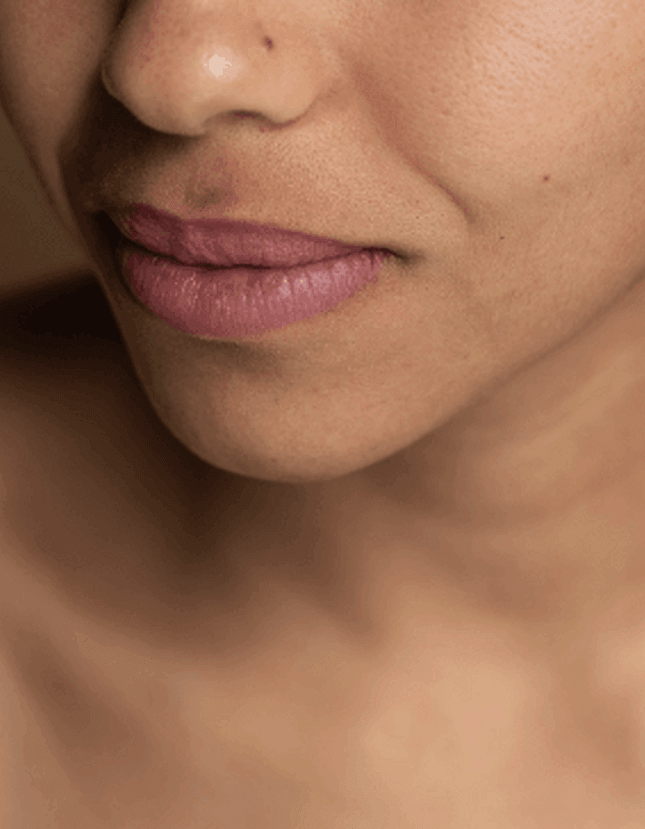
Warts are benign skin growths caused by the human papillomavirus (HPV). Although they can appear anywhere on the body, warts on the face tend to cause the greatest aesthetic discomfort. These growths are generally not dangerous to health – they are not cancerous and do not typically lead to serious health problems. Nevertheless, many people seek to have them removed due to cosmetic concerns or psychological discomfort.
Why do warts appear on the face?
Warts are caused by the human papillomavirus (HPV), which belongs to the Papillomaviridae family. More than 150 HPV types are known, and different types produce different forms of warts in different locations.
HPV can be transmitted in several ways: through direct contact (touching warts or an infected person), via contaminated objects (towels, shaving tools), or through autoinoculation – when a person transfers the virus from one area of their own body to another by touching an existing wart and then a different site. The state of the immune system is an important factor. Warts appear more frequently or increase in number when immunity is weakened, for example following periods of stress, fatigue, or illness.
How to recognize a wart on the face
Warts typically present as small, benign skin growths whose surface may be rough, uneven, or smooth, depending on the type. Color ranges from skin-toned to yellowish-grey, pinkish, or brownish. Size is generally between a few millimetres to about 0.4 inches. It is important not to confuse warts with other skin lesions – such as corns, moles, or malignant tumors. When there is any doubt, a dermatologist can perform a dermatoscopic examination to establish an accurate diagnosis.
Types of warts on the face
Three types of warts are most commonly found on the face. Flat warts (verruca plana) are small, slightly raised growths with a smooth surface, usually yellowish, pinkish, or skin-colored, and up to 3 mm in size. They are more frequently identified in children and adolescents and may grow in clusters on the face, neck, and wrists. Filiform warts are characterized by an elongated, thread-like shape with fine projections; they are usually light or skin-colored and are more common in adults, typically appearing around the eyes, nose, mouth, neck, or eyelids. Common warts (verruca vulgaris) are round or irregularly shaped growths with a rough surface that most often appear on the hands, though in some cases they may also be found on the face.
How are warts on the face treated?
Due to the wide variety of wart types, there is no single universal removal method. The treatment approach is selected individually, taking into account the location, depth, extent, and the patient's age. During a consultation, a dermatologist examines and evaluates the skin growths, establishes a diagnosis, and determines the most appropriate treatment method. Wart removal may be performed using a laser, during which water in the skin cells absorbs the laser beam's energy, converting it into heat that thermally damages the wart tissue – this method is associated with a good cosmetic outcome and minimal scarring risk.
Cryotherapy is also used, where the wart is treated with liquid nitrogen, causing the tissue to freeze and subsequently slough off. Electrosurgery, in which the wart tissue is destroyed using an electric current, is another option, though healing after this procedure may take longer.
Do warts on the face disappear on their own?
Some warts may resolve without treatment. Approximately 65% of warts clear spontaneously within 1 to 2 years, particularly in children or individuals whose immune system responds actively to the virus (Kuwabara, 2015). However, this process can take longer – sometimes several years. Treatment is more commonly pursued when warts are spreading to other areas of the body, causing aesthetic or psychological discomfort, are located in sensitive areas, or are being scratched, which increases the risk of secondary infection.
Prevention and skin care
Several factors may reduce the risk of warts appearing or spreading. Regular hand hygiene, avoiding touching warts (one's own or others'), and not sharing towels or personal hygiene items all help lower the likelihood of transmission. A balanced diet, adequate sleep, and stress management contribute to a stronger immune system, which is better able to combat HPV infection. Scratching or cutting warts independently may not only fail to improve the situation but also increase the risk of infection and further spread. It is crucial to avoid self-treatment methods that involve cutting or picking at warts, as this can lead to scarring, infection, and further dissemination of the virus.